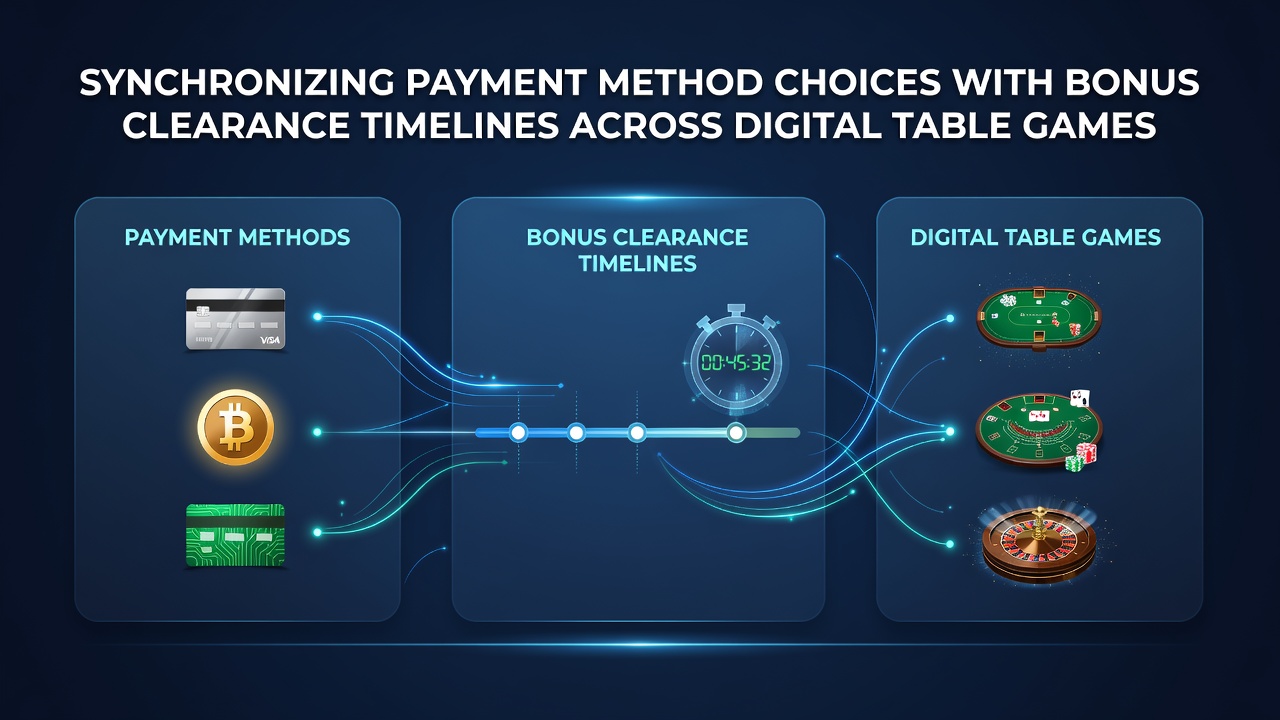
Coordinating Payment Processing Speeds With Promotional Fulfillment Periods in Online Table Games
Digital table games such as blackjack, roulette and baccarat operate on platforms where payment method selection directly influences how quickly players meet promotional requirements; processing times range from instant e-wallet transfers to multi-day bank wire confirmations, and each option aligns differently with the fixed windows operators set for bonus clearance. Observers note that platforms typically grant 30 to 90 days for players to satisfy wagering targets, yet table game contributions often sit between 10 and 50 percent of total requirements, making the speed of deposits and withdrawals a practical factor in completion rates.
Payment Method Characteristics in Digital Environments
Credit and debit cards deliver near-instant funding in most jurisdictions, allowing players to begin accumulating qualifying wagers immediately after account verification, while e-wallets such as PayPal or Skrill add another layer of speed because they bypass traditional banking delays. Cryptocurrency options, though less common in table game sections, provide blockchain confirmations that settle within minutes to hours depending on network congestion, and researchers at the University of Nevada have documented how these faster rails correlate with higher completion percentages when bonus periods fall under 45 days. Bank transfers and prepaid vouchers, by contrast, introduce settlement lags that can consume several days, reducing the effective time available for table play before deadlines expire.
Bonus Structures Specific to Table Games
Operators structure table game bonuses with distinct wagering multipliers and contribution percentages that differ from slot promotions; for instance, blackjack bets may count at 20 percent toward requirements while roulette even-money wagers sometimes receive zero contribution. Data from industry reports indicate that players who select rapid payment rails maintain better alignment with these multipliers because they can adjust bet sizes and game choices within the same session window without waiting for funds to clear. Those who rely on slower methods frequently encounter situations where partial progress stalls while processing completes, leaving insufficient calendar days to reach full clearance.
One study revealed that platforms using automated bonus tracking tools display real-time contribution meters that update within seconds of each hand or spin, giving players immediate feedback on whether their chosen payment speed supports the remaining requirement volume. When timelines tighten toward the final week, experts recommend shifting to methods that support same-day withdrawals so any excess funds can be secured before promotional periods end.
Regional Regulatory Influences on Timing
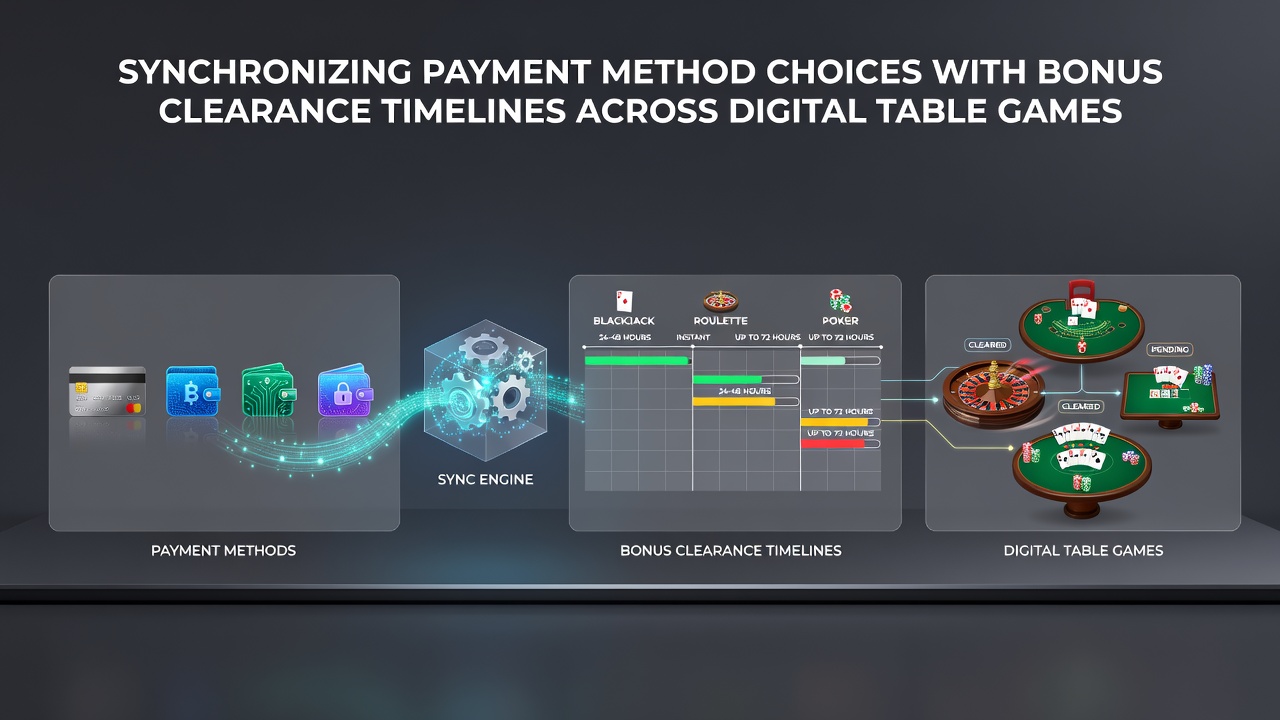
Regulatory frameworks outside the United Kingdom shape how operators present payment and bonus combinations; the Nevada Gaming Control Board requires licensed sites to disclose processing timeframes clearly, and similar transparency rules appear in Australian state guidelines that mandate visible countdown timers for all active promotions. These disclosures help players anticipate whether a chosen deposit method will leave adequate days for table game volume accumulation. In October 2026 several North American and European platforms introduced unified dashboards that combine payment speed estimates with remaining bonus days, allowing users to model different scenarios before committing funds.
Industry associations such as the American Gaming Association have published aggregated figures showing that sites offering instant funding options report 12 to 18 percent higher bonus redemption rates among table game participants compared with those limited to slower rails. European Gaming and Betting Association statistics further indicate that cross-border players who switch between e-wallets and local bank methods achieve more consistent clearance outcomes when they monitor both processing estimates and contribution percentages simultaneously.
Practical Synchronization Techniques
Players often map deposit arrival estimates against bonus calendars at the start of each promotional cycle; they calculate required table game volume by dividing the remaining wagering target by the contribution rate of their preferred variant, then verify that the payment rail supports at least two full cycles of play before expiration. When multiple active bonuses overlap, observers recommend prioritizing the shortest timeline first and selecting the fastest available method to protect progress on that requirement. Automated reminders triggered by platform apps notify users when processing windows approach critical thresholds, reducing the chance that funds arrive too late to contribute meaningfully.
Case examples from platform analytics demonstrate that users who combine e-wallet deposits with low-contribution table variants such as blackjack surrender tables complete requirements in 65 percent of cases under 30-day limits, whereas reliance on wire transfers drops that figure noticeably when deadlines compress. Those patterns hold across different operator libraries because the underlying variable remains the interval between fund arrival and the final clearance date.
Conclusion
Payment method timing and bonus clearance windows intersect at every stage of digital table game participation, and operators continue to refine tools that display both variables in single interfaces. Regulatory disclosures and industry data confirm that faster rails support higher completion volumes when contribution percentages and calendar constraints remain fixed, while slower methods require earlier initiation to avoid shortfalls. Players who treat processing speeds as measurable inputs alongside wagering multipliers maintain clearer pathways through promotional structures across multiple table game formats.